Physical Address
304 North Cardinal St.
Dorchester Center, MA 02124
Physical Address
304 North Cardinal St.
Dorchester Center, MA 02124
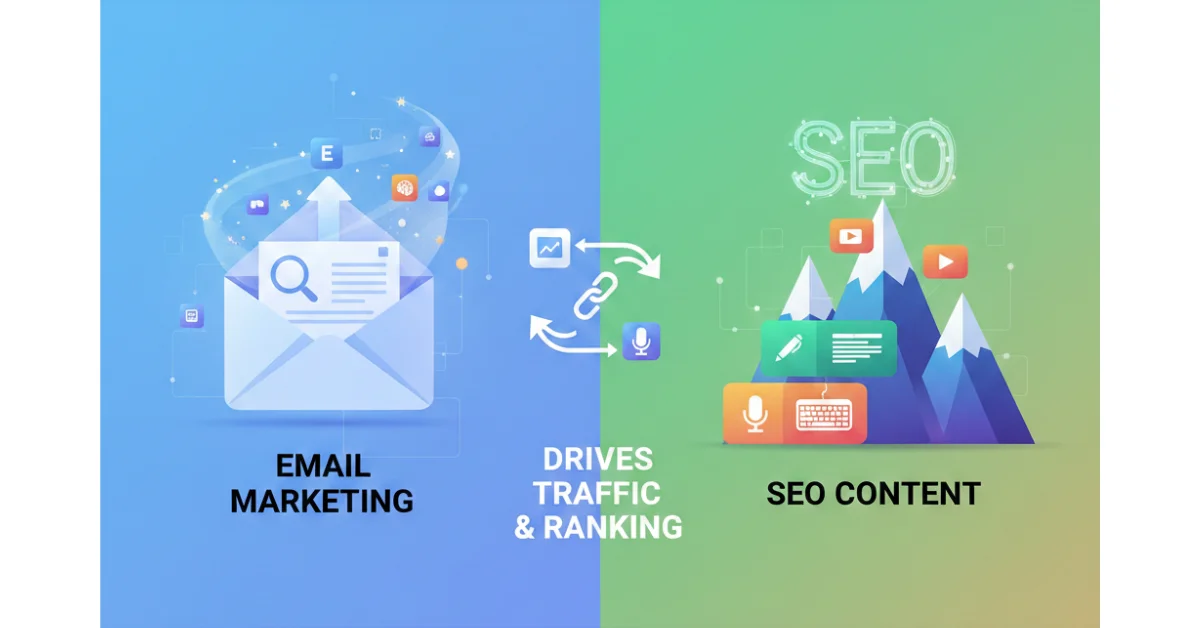
Many marketers view search engine optimization (SEO) and email marketing as two separate highways. One focuses on attracting new visitors from search engines, while the other focuses on nurturing relationships with an existing audience. However, failing to build a bridge between these two powerhouses is a missed opportunity. The truth is, a strategic approach to Email Marketing for SEO Content can create a powerful cycle that accelerates growth, enhances authority, and significantly improves your search rankings.
When you publish a new piece of content, its journey to the first page of Google can be slow and arduous. It needs to be discovered, indexed, and evaluated against countless other pages. By leveraging your email list, you can give your content an immediate, powerful boost. You’re not just waiting for traffic to find you; you’re sending a curated audience of engaged readers directly to your new article.
An intense wave of early engagement immediately signals to search engines that your content delivers value and meets user needs from the moment it’s published. In this guide, we’ll break down how these two essential marketing pillars work together and why their connection matters for long-term success. We’ll unpack the tangible benefits of this integration and provide actionable strategies to amplify your content, build authority, and craft email campaigns that directly support your SEO goals. This is your blueprint for turning two separate tactics into a unified, highly effective content promotion machine.
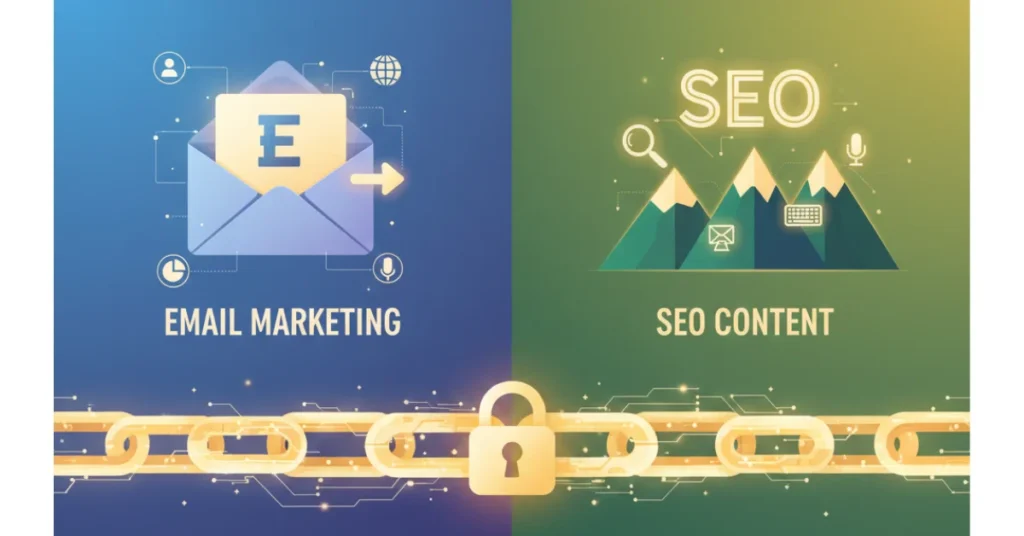
At its core, both SEO and email marketing aim to deliver the right content to the right person at the right time. SEO does this by answering a user’s query in a search engine, while email marketing delivers curated information directly to a subscriber’s inbox. The synergy between content marketing and email becomes apparent when you utilize the direct, personal channel of email to support the public, discovery-focused channel of search.
Search engines like Google closely monitor how users engage with your pages—whether they click through, stay long enough to read the content, and interact with elements on the site. Subscribers who already trust your brand are far more likely to show these positive engagement patterns than visitors who land on your site for the first time through search. They already trust your brand, so they are more inclined to spend several minutes reading your article, clicking on internal links, or even sharing it on social media.
This relationship is a two-way street. Your high-quality content attracts subscribers in the first place, and your email list provides the initial audience to validate the quality of that content with search engines. This creates a self-reinforcing loop: great content attracts subscribers, who help it rank higher, which in turn attracts more traffic and potential subscribers. Using email marketing to enhance SEO-focused content is one of the most essential practices in modern digital growth strategies.
When you hit “publish” on a new blog post, the clock starts ticking. Search engines rely on multiple indicators to decide where newly published content should appear in the rankings. An email sent to your subscribers can influence several key metrics almost instantly.
A study on email marketing ROI shows that for every $1 spent, email marketing generates $42 in return, highlighting just how engaged this audience channel is. When you direct this involved audience to a new post, they generate immediate pageviews. This spike signals to search engines like Google that the new URL is active and deserves attention, potentially speeding up indexing.
More importantly, these are not just empty pageviews. Your subscribers are more likely to spend more time on the page, reducing the bounce rate and signaling a high-quality user experience—a critical ranking factor. This initial boost is a fundamental component of effective Email Marketing for SEO Content.
Read More: Authority building through content promotion
Understanding the connection is the first step. The next step is implementing concrete strategies that turn theory into practice. Integrating your efforts requires a deliberate and well-planned approach. Here are proven email marketing strategies for SEO that you can put into action.
This is the most direct and essential strategy. Every time you publish a new piece of SEO content—be it a blog post, a guide, or a case study—your email list should be your first port of call for promotion.
void simply sending an email with a link. You need to sell the click. Craft a compelling email that teases the value of your content. Use an intriguing subject line that sparks curiosity. In the body, provide a short, enticing summary of what the reader will learn or what problem the article solves. Then use a clear, prominent call-to-action (CTA) button, such as “Read the Full Guide” or “Discover the Secrets,” to direct them to the page. This proactive promotion is a foundational tactic for email marketing and SEO Content.
Your existing SEO content that already ranks well is a goldmine for growing your email list. These pages regularly bring in fresh, highly relevant visitors. Your objective is to turn those visitors into dedicated subscribers.
A content upgrade is an extra resource you provide in return for a visitor’s email address. It’s directly related to the content the person is already consuming, making the offer highly relevant and effective.
By offering these upgrades, you grow your list with people who are demonstrably interested in your topics. This makes future SEO-optimized email campaigns even more effective, as you are sending content to a highly receptive audience.
Earning high-quality backlinks remains crucial for achieving higher search rankings. While cold outreach for backlinks has a notoriously low success rate, email marketing enables you to build genuine relationships that naturally lead to links. Your subscriber list likely contains bloggers, journalists, partners, and industry influencers.
By consistently delivering high-value content to their inboxes, you build trust and establish your authority. When you publish a significant piece of content, like an original research report or a comprehensive pillar page, you can send a personalized email to these influential segments.
Frame it not as a request, but as sharing something you believe they and their audience would find genuinely valuable. This soft approach dramatically increases the likelihood that they will link to your work, boosting your email marketing and content visibility.
Your content library is an asset that can depreciate if left unattended. Older posts, even evergreen ones, can get buried over time and lose their search rankings. Email marketing is the perfect tool for breathing new life into this content.
You can feature an updated “classic post” in your weekly newsletter or create a roundup of your “Top 10 Articles on [Topic].” This strategy drives fresh traffic and new engagement signals to these older URLs. This tells search engines that the content is still relevant and valuable, which can help it regain or even surpass its previous rankings. This is a smart way to maximize the ROI of your entire content library through Email Marketing for SEO Content.
Read More: Promoting content clusters
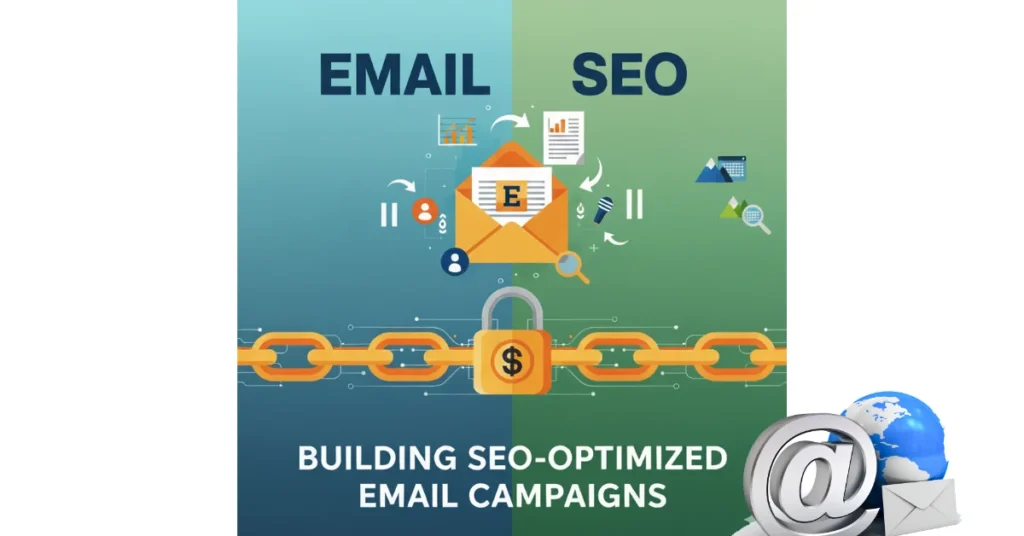
To achieve the best results, your emails themselves need to be optimized for the task at hand. It’s not just about providing links; it’s about crafting communication that drives the desired outcome. This focus on SEO-optimized email campaigns sets a basic newsletter apart from a strategic SEO tool.
For emails promoting a new piece of content, resist the temptation to include multiple offers or links. Your goal is singular: get the reader to click through to your new article. A focused email with one clear CTA will always outperform a cluttered one with competing messages. This clarity is key to driving organic traffic through email, as it channels the user’s attention directly where you want it to go.
The subject line acts as the doorway to your content. A dull or generic subject line will be ignored. Spark opens by using curiosity, urgency, or a substantial benefit in your subject line. Instead of a generic “New Blog Post,” use a hook like “The SEO Mistake Almost Everyone Misses.” A higher open rate directly translates to more potential clicks on your content link, making this a critical part of your email marketing strategies for SEO.
Well over half of all emails are opened on mobile devices. If your email template is not responsive and easy to read on a small screen, your efforts will be wasted. Users will not struggle to read your message or try to pinch and zoom to find the link. Ensure your emails are mobile-friendly with large fonts, a single-column layout, and a prominent CTA button that is easy to tap. The user journey from inbox to blog post must be seamless.
Not all subscribers are interested in the same topics. A robust strategy for Email Marketing for SEO Content involves segmentation. Group your subscribers by their interests, past engagement, or sign-up location. For example, if someone subscribed via a content upgrade on social media marketing, they are a prime audience for your next article on that topic. Sending highly relevant content to smaller segments leads to higher engagement rates, which transmits even stronger positive signals to search engines. The powerful combination of SEO and email marketing integration shines when you deliver personalized content.
Read More: Content authenticity in email marketing
To prove the value of your Email marketing for SEO Content strategy, you must track your results. Use a combination of your email marketing platform’s analytics and Google Analytics to get a full picture of performance.
In your email software, monitor open rates and click-through rates (CTR). These metrics tell you how effective your subject lines and email copy are. In Google Analytics, create a custom segment for traffic coming from your email campaigns. Analyze the behavior of this segment. Look at metrics like:
Comparing these metrics to your overall site average will likely show that your email traffic is significantly more engaged. This is powerful data you can use to justify further investment in your Email Marketing for SEO Content efforts. This data-driven approach is essential for anyone looking to boost website traffic with email campaigns effectively. The ultimate goal is to improve email marketing for content visibility, and data is how you measure that success.
The separation between email marketing and SEO is an outdated concept. In today’s competitive digital landscape, success requires a holistic approach where all channels work in concert. By strategically using Email Marketing for SEO Content, you are not just promoting articles; you are building a robust system for sustainable growth. Your email list becomes an incubator for your content, providing the initial traction and engagement signals that capture search engines’ attention.
This synergy transforms your marketing efforts from a series of disconnected tasks into a powerful, self-reinforcing engine. Your content gives people a reason to subscribe, and your subscribers give your content the boost it needs to rank. The SEO and email marketing integration lets you take control of your traffic, build deeper relationships with your audience, and gain greater authority in your niche. Start today by promoting your next piece of content to your email list and watch as you create a direct and consequential impact on your SEO results.
Email marketing helps SEO by driving immediate, high-quality traffic to your new content. This initial surge of engaged visitors signals to search engines like Google that your content is valuable and relevant. This can lead to faster indexing and improved initial rankings. Positive user signals, such as longer time on page and lower bounce rates from your loyal email subscribers, further reinforce your content’s quality.
While email marketing is not a direct ranking factor itself, it strongly influences factors that Google does care about. By promoting content to your email list, you increase traffic, user engagement (time on page, lower bounce rate), social shares, and opportunities for natural backlinks. These positive signals can significantly improve search engine rankings over time.
The most crucial practice is to consistently promote every new piece of SEO content to your email list. Creating a dedicated email broadcast for each new blog post or guide ensures your most valuable content gets an immediate audience, generating the traffic and engagement signals needed to gain traction in search results.
You can grow your list by offering “content upgrades” within your high-performing blog posts. A content upgrade is a bonus resource, like a downloadable checklist, template, or exclusive case study, that visitors receive in exchange for their email address. This strategy attracts subscribers who are already interested in your topics.
For the best results, segment your email list by subscriber interests or past behavior. Sending more relevant content to smaller, targeted segments increases open rates and click-through rates. This heightened engagement sends even stronger positive signals to search engines, showing that your content is highly valuable to a specific audience.